Knitwear trims and what gets marked
Tiruppur is India's best-known knitwear cluster, producing T-shirts and other knitted garments for export and domestic brands. Each garment carries trims that show the brand: woven or printed labels, card hang tags, buttons, zip pullers, metal or plastic badges and leather or PU patches on jackets and caps. Buyers change logos and styles between orders, so trim suppliers need a method that can switch artwork quickly without making new dies or screens. Export orders also bring style and order numbers on care labels and cartons, so that a shipment can be traced back to its production lot.
Sample rooms are another user. Merchandisers preparing samples for a buyer's approval need one-off patches and tags quickly, and a laser lets the sample team make them in-house without waiting for a die.
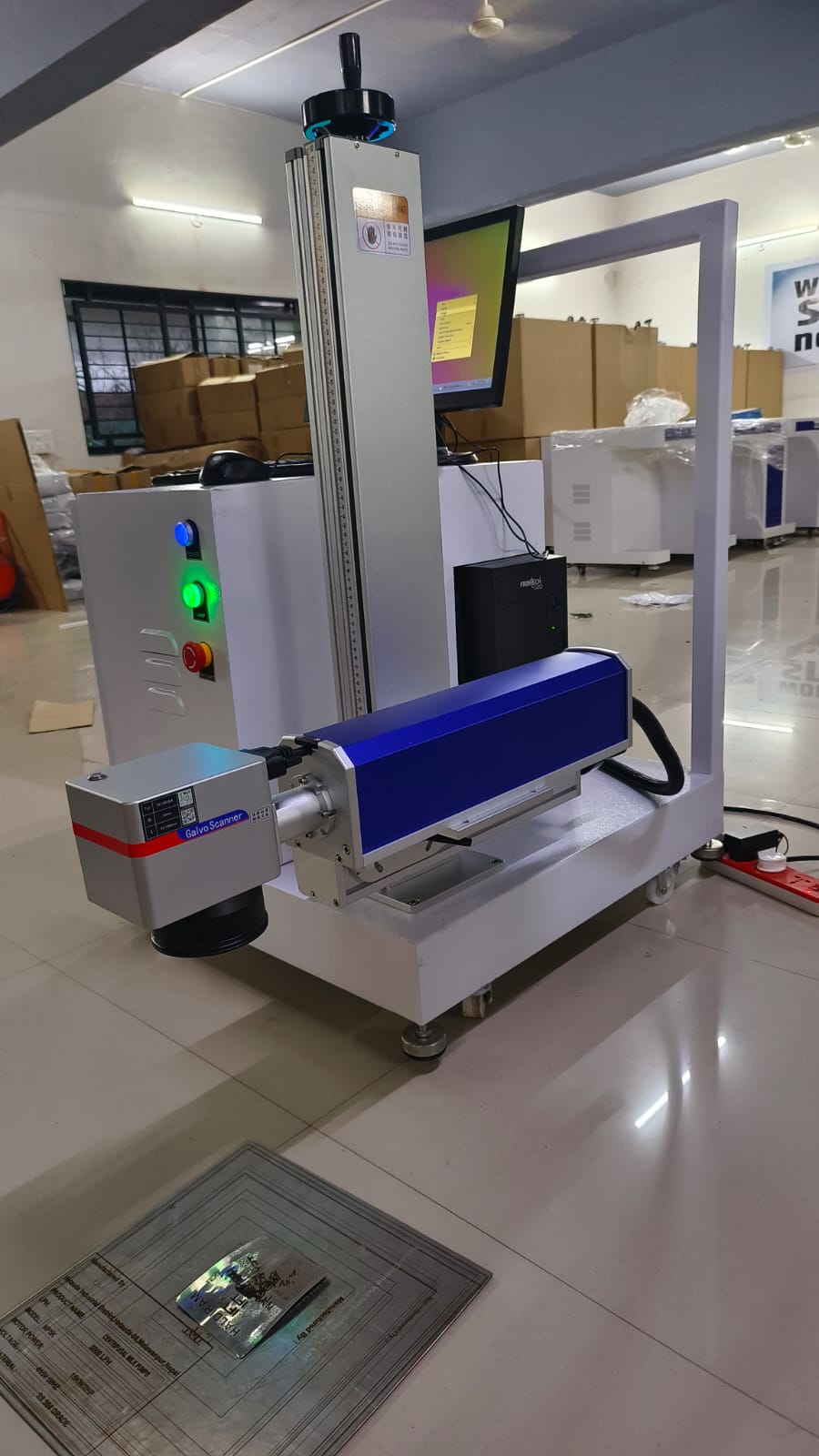
Laser marking fits this pattern well. The artwork lives in software, so a short batch of tags or patches can be marked with one design and the next batch with another. A CO2 laser can also cut shapes in card and leather. A trim unit choosing a laser marking machine in Tiruppur should check how quickly artwork can be loaded and positioned, since changeovers happen many times a day in busy seasons.
Which laser suits which trim
- Leather and PU patches. A CO2 laser marking machine burns a clean, darkened logo into genuine leather and most PU patches. Check the material before marking: PVC-based synthetic leather must never be lasered, because it releases hydrogen chloride gas.
- Card hang tags and paper labels. CO2 also marks and cuts card and kraft board for hang tags, and on coated or printed tags it can remove the top layer to reveal a contrasting layer underneath.
- Metal buttons and badges. Brass and zinc alloy buttons and badges are fiber laser work. A MOPA laser gives darker marks on anodised aluminium badges and trims.
- Woven labels and plastic buttons. Woven labels and plastic buttons vary a lot in how they react. A CO2 laser marks many fabrics, while plastic buttons may need a fiber or UV laser; the guide to laser marking on plastic explains why, and samples should always be tested.
- Carton labels. Order and size details on export cartons are usually printed on a label rather than marked. For packing lines that need a label on each carton, NMB deals with Markem-Imaje print and apply labelling systems.
Tiruppur application guides
Start with garment labels and hang tags and leather patches for caps and jackets. Bag and accessory makers can see laptop bag and backpack patches and jute and cotton bags.
For metal trims, see laser marking on badges. Natural buttons in coconut shell and wood are covered under coconut shell crafts and laser marking on wood. Exporters packing garments in branded boxes can look at kraft boxes and gift packaging.
Leather and wood produce smoke when marked, so any machine on a trim floor should run with fume extraction, and the marking area should be kept clear of loose fabric and cut waste.
Buying a laser marking machine in Tiruppur
NMB Enterprises is based at Poonamallee in Chennai, and Tiruppur units reach NMB by phone or WhatsApp on 098417 60722. Send sample photos of each trim with its material (leather, PU, card, metal or fabric) and marking size, and say how many pieces a typical order runs to. If you also want to cut shapes, mention the material thickness. If you plan to mark finished garments rather than loose trims, say so, because marking on a garment needs a flat fixture and careful power settings to avoid scorching the fabric. Photos of both the front and back of patches help, since the backing material often decides whether a patch can be lasered at all.
A trim supplier handling both leather and metal may need two machines, CO2 for leather and card and fiber for metal buttons, so a clear list of trims helps NMB recommend the right laser marking machine in Tiruppur for your mix.